Walking in Their Shoes: What Historical Empathy Is and Why It Matters More Than You Think
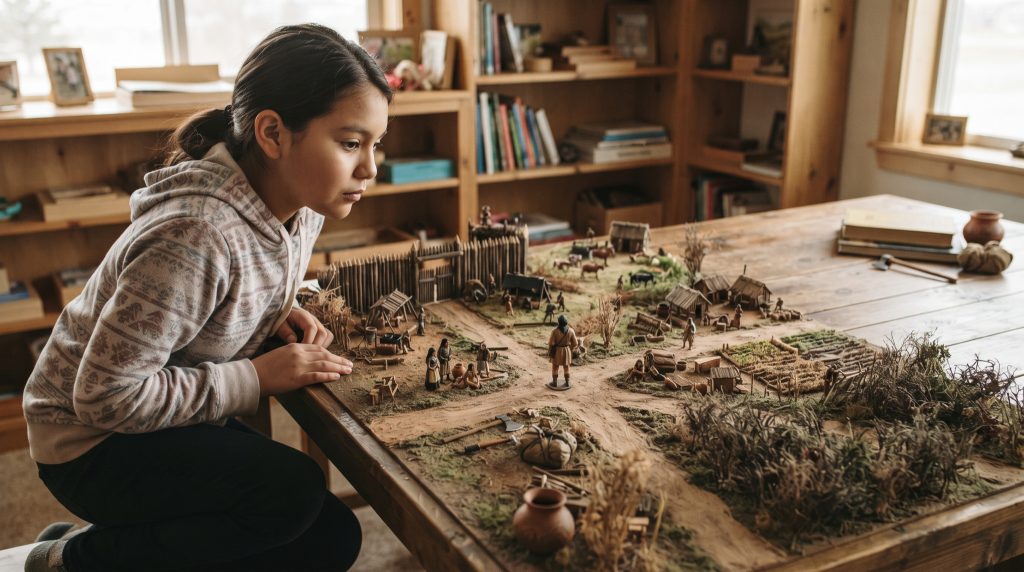
Many homeschooling parents eventually ask some version of the same question: Are we doing too much memorization of dates and names instead of actual understanding?
It is an understandable concern. A child may be able to recite the date of a war, identify a monarch, or name the explorer in a chapter review, yet still seem disconnected from the people who actually lived through those events. The facts are there, but the meaning feels thin.
This article explores one important part of that larger question: historical empathy.
Historical empathy is not about turning history into feelings instead of facts. It is not about approving of everything people did in the past. It is the disciplined habit of trying to understand how people in another time perceived their world, what choices they thought they had, and why their actions may have made sense to them at the time.
That is a much deeper kind of understanding than simply remembering a name.
What Historical Empathy Actually Means
In everyday speech, empathy often means feeling what another person feels. In history education, the term means something more specific.
Historical empathy asks students to understand people in the past within their own context. What did they know? What did they believe? What pressures shaped their choices? What dangers, duties, customs, assumptions, hopes, or fears influenced them?
This matters because people in the past did not live with our information, our social assumptions, our technologies, or our moral vocabulary. They made decisions inside worlds that often felt completely normal to them, even when those worlds feel strange or troubling to us.
Historical empathy does not mean saying, “They were right.” It means asking, “Why did this seem reasonable, necessary, honorable, frightening, or unavoidable to them?”
That distinction is important.
A child who says, “That was stupid. Why didn’t they just do what we would do?” has not yet understood the historical problem. A child who says, “They did not have the same choices we have, and they may not have seen the situation the way we do,” is beginning to think historically.
Why Historians Care About Perspective
Professional historians do not simply collect facts and arrange them in chronological order. They interpret evidence. They try to reconstruct human worlds from fragments: letters, laws, objects, buildings, diaries, images, speeches, account books, clothing, tools, and remains.
To do that well, historians have to ask perspective questions.
What did this person believe was happening? What information did they have? What did their society consider honorable, shameful, dangerous, or normal? What did they fear losing? What did they hope to gain? What choices were actually available?
A soldier’s letter home, for example, is not just a source of facts. It is evidence of anxiety, loyalty, homesickness, propaganda, social duty, and personal experience. A law code is not just a list of rules. It reveals what a society valued, feared, regulated, or took for granted. A household object can reveal patterns of labor, wealth, gender roles, trade, and daily habit.
This is why historical empathy belongs at the center of meaningful history learning. It helps children see historical figures not as labels attached to events but as human beings acting inside particular worlds.
Why Presentism Gets in the Way
One of the main obstacles to historical understanding is presentism: judging the past entirely through modern assumptions.
Children do this naturally. Adults do too. We read about a past decision and immediately measure it against what we know now. We forget that historical people did not know how events would turn out. They did not have access to later science, later political ideas, later technologies, or later moral debates. They acted from within the limits of their own time.
This does not mean we suspend judgment. Some actions in history deserve serious moral evaluation. But judgment without understanding can become shallow. It can turn history into a series of easy condemnations or easy hero stories.
Historical empathy slows that process down.
Instead of asking only, “Was this good or bad?” we first ask, “What world produced this decision?” Then we can ask better moral and analytical questions: “What alternatives existed?” “Who benefited?” “Who was harmed?” “Who resisted?” “What did people at the time disagree about?”
For homeschooling families, this can change the tone of a history lesson. A discussion moves from “memorize what happened” to “try to understand how human beings made choices under pressure.”
How Historical Empathy Changes Learning
Names become easier to remember when they belong to people.
A child may quickly forget a list of rulers, reformers, soldiers, merchants, or inventors. But when that child understands a person’s dilemma, the name begins to stick to a story.
Consider the difference between these two approaches:
“Harriet Tubman helped enslaved people escape through the Underground Railroad.”
That sentence is important, but it remains summary-level knowledge.
Now add perspective questions:
What risks did she face each time she returned? What did enslaved families have to decide before fleeing? What would it feel like to trust someone in secret when betrayal could mean death? What information would people need before making that choice? Why might some people decide not to go?
The facts have not disappeared. They have become more meaningful.
The same is true across historical periods. A Roman soldier, a medieval peasant, an Egyptian scribe, a frontier settler, a factory worker, a suffragist, a refugee, or a child living through war becomes more than a term in a chapter. Each becomes a person whose situation can be investigated.
That investigation creates memory hooks. It also creates humility. Students begin to realize that human beings rarely act from simple motives. They act within webs of belief, pressure, habit, fear, loyalty, ignorance, courage, and necessity.
That is historical understanding.
Historical Empathy in Homeschool Practice
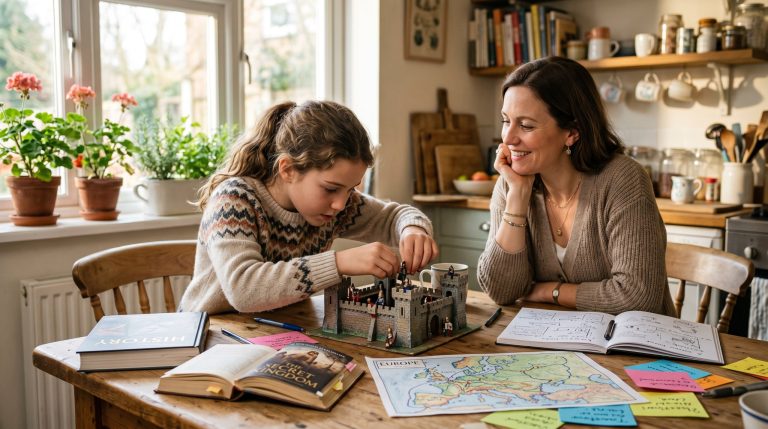
Homeschooling offers a particular advantage here because parents can slow down, pause, discuss, and follow a child’s questions.
Historical empathy does not require a specialized curriculum. It often begins with changing the questions.
Instead of asking only:
“When did this happen?”
or:
“Who was the leader?”
parents can also ask:
“Why might this person have made that choice?”
“What did they know at the time?”
“What were they afraid of?”
“What did their society expect from them?”
“What choices did they think they had?”
“What would have happened if they refused?”
“What might another person in the same event have experienced differently?”
Primary sources are especially useful for this kind of learning. Letters, diaries, speeches, photographs, oral histories, legal documents, and eyewitness accounts allow children to encounter people speaking from within their own time. Even short excerpts can change the lesson.
A textbook summary might tell students what happened. A letter or diary can show how it felt to live through it.
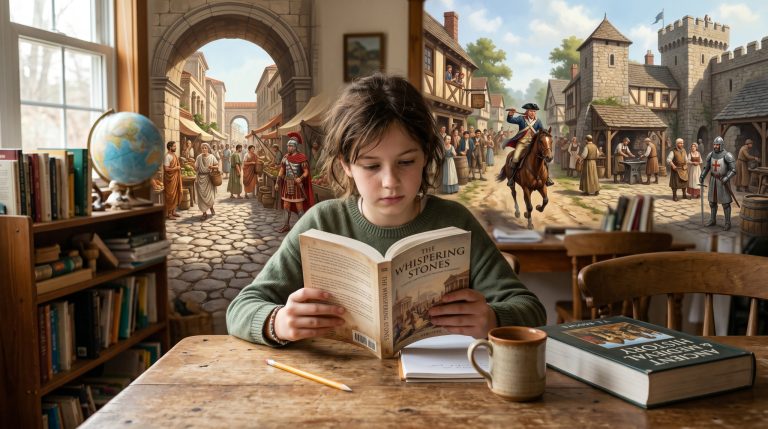
Narrative also matters. Children often understand people better through stories than through abstract summaries. Historical fiction, biographies, family read-alouds, and well-chosen narrative history can help students imagine the pressures of a period. The key is to keep evidence and imagination connected. We can imagine responsibly when we keep asking, “What do we know from the sources?” and “What are we inferring?”
Historical-Learning Application
Historical empathy strengthens several specific habits of historical learning.
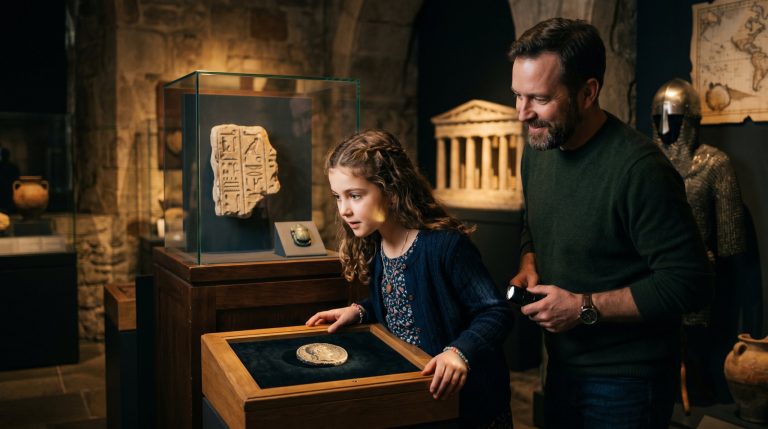
First, it improves observation. When students look at a painting, photograph, artifact, or reconstruction, they can ask: What clues show how people lived? What do clothing, tools, buildings, posture, and surroundings tell us about status, labor, danger, or daily life?
Second, it deepens discussion. A parent can ask, “Was this decision reasonable from their point of view?” or “What pressures shaped this choice?” Those questions invite analysis rather than simple recall.
Third, it improves source interpretation. Students learn that people experienced the same event differently. A soldier, a ruler, a civilian, a merchant, a prisoner, and a child may all describe the same moment in different ways. That does not make history hopelessly subjective. It means evidence has to be interpreted carefully.
Fourth, it supports memory. Human stories create stronger mental connections than isolated facts. A date becomes more meaningful when attached to a crisis, a decision, a conflict, or a lived experience.
Finally, historical empathy helps students avoid treating the past as a flat stage filled with foolish or heroic people. It teaches them to see complexity. People in the past had reasons, blind spots, loyalties, assumptions, and constraints. Understanding those does not remove moral judgment. It makes judgment better informed.
Practical Takeaways for Homeschooling Parents
Historical empathy can be introduced through small changes.
When reading a history lesson, pause before the outcome is revealed and ask what the people involved could have known at that moment. Children often judge decisions by their results. History becomes more interesting when they realize that people had to act before they knew the ending.
When studying a historical figure, move beyond “What did this person do?” Ask, “What problem was this person trying to solve?” “What mattered to them?” “Who disagreed with them?” “What did they risk?”
When using images or artifacts, ask students to notice evidence. What kind of clothing do you see? Who appears powerful? Who appears to be working? What tools are present? What does the setting suggest about wealth, danger, religion, transportation, or daily life?
When discussing morally difficult history, separate understanding from approval. A useful sentence for children is: “We are trying to understand why people acted this way. That does not mean we are saying it was right.”
When possible, include more than one perspective. A war looks different from the viewpoint of a general, a foot soldier, a civilian family, a political leader, and a defeated enemy. A reform movement looks different to supporters, opponents, beneficiaries, and those excluded from its promises.
These practices do not eliminate factual learning. They give facts a place to live.
Dates, names, and events still matter. But they become more meaningful when students understand the human situations behind them.
Conclusion
So, are homeschoolers sometimes doing too much memorization of dates and names instead of actual understanding?
This article offers one piece of the larger answer: historical understanding includes learning to understand people in the past on their own terms.
Historical empathy helps children move from “I know the name” to “I understand the person’s world.” It turns history from a list of distant facts into an inquiry into human experience, decision-making, belief, fear, courage, conflict, and consequence.
This does not mean facts are unimportant. It means facts should support understanding. A date can tell us when something happened. A name can tell us who was involved. But historical empathy helps students ask why it mattered, how it was experienced, and why people acted as they did.
That is one important step away from memorization alone and toward genuine historical understanding.
Help Your Child See the People Inside the Past
If this article made you think, “Yes, my child needs more than names and dates,” Spot the Anachronism gives you a practical way to build that kind of understanding month after month. Each visual history challenge asks your child to slow down, look closely, and ask what belongs in a historical scene — and what does not. That simple activity turns history into active investigation: What clues show how people lived? What pressures shaped their world? What details reveal status, labor, danger, belief, or daily life? Instead of treating the past as a list of facts to remember, your child practices seeing historical people inside their own world. A monthly Spot the Anachronism subscription gives your homeschool a repeatable visual history habit that builds observation, discussion, curiosity, and real historical thinking.
This Article Is Part Of A Larger Series
Question: Are we doing too much memorization of dates and names instead of actual understanding?
Series Position: Article 7 of 11
This article explores one evidence-supported aspect of the larger question. Future articles examine additional research-supported approaches to increasing engagement with history.
Related Facebook Discussions
- This discussion looks at how fatigue and physical effort can make historical characters feel more human instead of merely posed.
- This discussion explores why small human imperfections can make a historical scene feel more like a lived moment.
- This discussion asks whether a historical scene behaves like one connected world rather than a collection of isolated details.