Why Exposure Feels Like Learning (Even When It Isn’t)
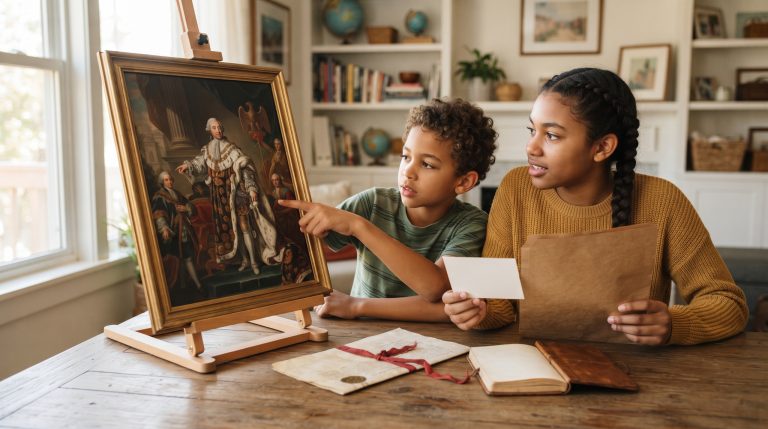
One of the most frustrating moments in homeschooling happens after a lesson that seemed to go perfectly.
Your child paid attention.
They answered questions.
They participated in the discussion.
They seemed interested.
You finish the lesson thinking:
“That went really well.”
Then a few days later you ask a simple question about the topic.
Silence.
Or perhaps a vague fragment of an answer.
Maybe a look of recognition without any real explanation.
And suddenly you’re wondering what happened.
They seemed to know it.
You covered the material.
You spent the time.
Why does it feel like none of it stuck?
The answer often lies in a distinction that many parents have never been taught:
Exposure is not the same thing as learning.
And until we understand that difference, it becomes very difficult to know whether a history lesson is actually working.
The Lesson That Looked Successful
Most homeschooling parents naturally evaluate lessons using visible indicators.
Was my child paying attention?
Did they complete the assignment?
Did they answer questions correctly?
Did they enjoy the activity?
Those observations matter.
But they do not necessarily tell us whether durable learning occurred.
Imagine a child watches an engaging documentary about Ancient Egypt.
They are fascinated by the pyramids.
They laugh at the narrator’s jokes.
They eagerly discuss mummies afterward.
The lesson feels successful because engagement was visible.
A week later, however, they struggle to explain why pyramids were built, who commissioned them, or what role they played in Egyptian society.
What happened?
Was the documentary ineffective?
Was the child distracted?
Not necessarily.
The child was exposed to information.
The question is whether that information was encoded strongly enough to become a lasting memory.
Those are two different things.
Why Familiarity Feels Like Knowledge
One reason this problem is so common is that familiarity creates a powerful illusion.
When information is fresh, it feels known.
We recognize names.
We recognize events.
We recognize concepts.
Recognition is easy.
Recall is much harder.
Suppose you show your child a list containing:
- Julius Caesar
- Augustus
- Cleopatra
- Mark Antony
Immediately afterward, they can identify each name.
The names feel familiar.
If you ask:
“Do you know who these people are?”
they may confidently answer yes.
But familiarity is not the same thing as understanding.
A week later, if you ask:
“Tell me everything you remember about Mark Antony,”
the answer may be very different.
Recognition requires information to be presented.
Recall requires information to be reconstructed from memory.
And reconstruction is what real learning ultimately depends upon.
Many lessons create recognition.
Far fewer create reliable recall.
That is why history can feel successful in the moment and disappointing later.
Exposure Is Not Encoding
Exposure simply means information entered a child’s awareness.
They heard it.
Saw it.
Read it.
Encountered it.
Encoding is something different.
Encoding occurs when the brain begins building durable memory pathways.
That process requires more than contact with information.
It requires mental work.
The brain remembers information more effectively when learners:
- make connections
- explain ideas
- organize information
- compare concepts
- ask questions
- generate responses
- reconstruct information from memory
In other words, memory grows through processing.
A child can sit through an excellent lesson and still do very little processing.
The lesson may be enjoyable.
The information may be interesting.
But if the brain does not actively work with the material, much of it remains fragile.
Exposure started the process.
Encoding never fully developed.
Why History Is Especially Vulnerable
History lessons often create this problem because history can be consumed passively.
A child can:
- watch a documentary
- listen to a read-aloud
- hear a lecture
- read a chapter
without ever being asked to do much with the information.
The experience feels educational because information is flowing.
But information flow is not necessarily learning.
History is particularly vulnerable because it contains so many details.
Names.
Places.
Events.
Dates.
Relationships.
Causes.
Consequences.
When students merely receive these details, the brain often treats them as temporary information.
The result is familiar to many parents:
“We just studied this.”
Yes.
You studied it.
But studying and encoding are not automatically the same thing.
History becomes memorable when students begin interacting with historical ideas rather than merely encountering them.
What Real Encoding Looks Like
Fortunately, genuine learning leaves clues.
Students who have encoded information can often do things that students relying on familiarity cannot.
They can explain.
They can summarize.
They can reconstruct.
They can connect ideas together.
They can answer unexpected questions.
They can tell the story in their own words.
This is one reason narration has remained such a powerful homeschooling practice for generations.
When a child finishes reading about Julius Caesar and then explains the story back to you, something important happens.
The brain must reconstruct the information.
It must organize events.
It must identify relationships.
It must determine what mattered.
That process strengthens memory.
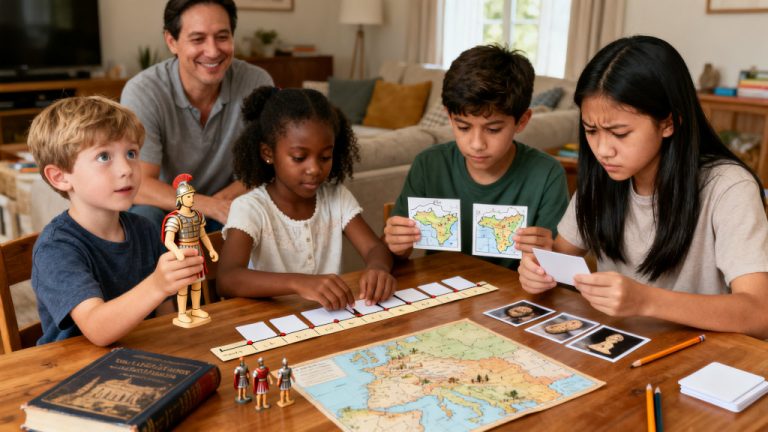
The same principle applies when students:
- retell a historical event
- compare two civilizations
- explain causes and effects
- answer open-ended questions
- participate in discussion
These activities require thinking.
Thinking creates stronger encoding than passive exposure alone.
Turning History Into Something Memorable
Imagine two students learning about the American Revolution.
The first student reads a chapter and answers multiple-choice questions.
The second student reads the chapter and then answers:
“Why do you think the colonists believed independence was worth risking their lives for?”
The second question requires interpretation.
The student must organize information.
They must connect facts to meaning.
They must construct an explanation.
That mental effort creates stronger encoding.
History becomes memorable when students are asked to make sense of the past rather than simply consume information about it.
This does not mean every lesson needs elaborate projects.
Often the most powerful learning activities are surprisingly simple.
Questions.
Conversation.
Retelling.
Explanation.
Comparison.
These activities transform exposure into something more durable.
A Better Way to Evaluate Lessons
Many parents evaluate lessons by asking:
“Did we cover the material?”
Coverage matters.
But coverage is not evidence of learning.
A more useful question is:
“Could my child explain this later?”
That single shift changes how we think about instruction.
Instead of measuring completion, we begin looking for evidence of reconstruction.
Instead of asking whether information was presented, we ask whether information can be retrieved.
The goal is not perfect recall.
The goal is evidence that learning is becoming durable.
This framework also removes a great deal of unnecessary self-doubt.
When a child forgets information after passive exposure, it does not automatically mean the lesson failed.
It may simply mean the lesson stopped before encoding became strong.
Practical Ways to Strengthen Encoding
You do not need to redesign your homeschool to apply this idea.
Small changes often make a significant difference.
After a lesson, ask:
“Tell me what happened.”
Pause documentaries and discuss key moments.
Invite children to explain events in their own words.
Ask:
- What surprised you?
- Why did this happen?
- What caused that decision?
- What would you have done?
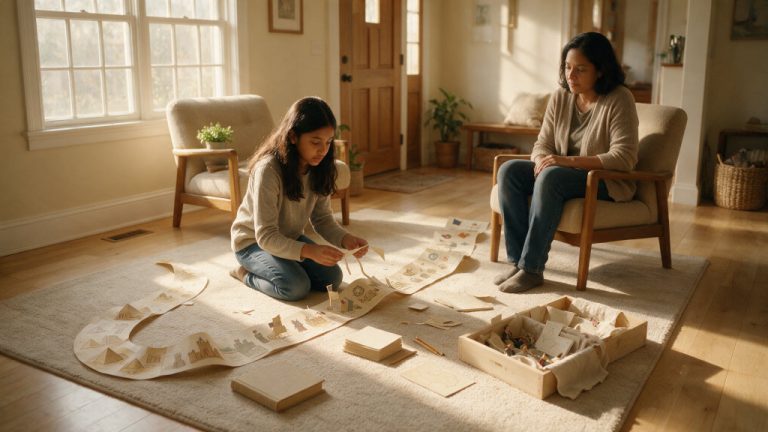
Encourage timeline reconstruction.
Try story retelling.
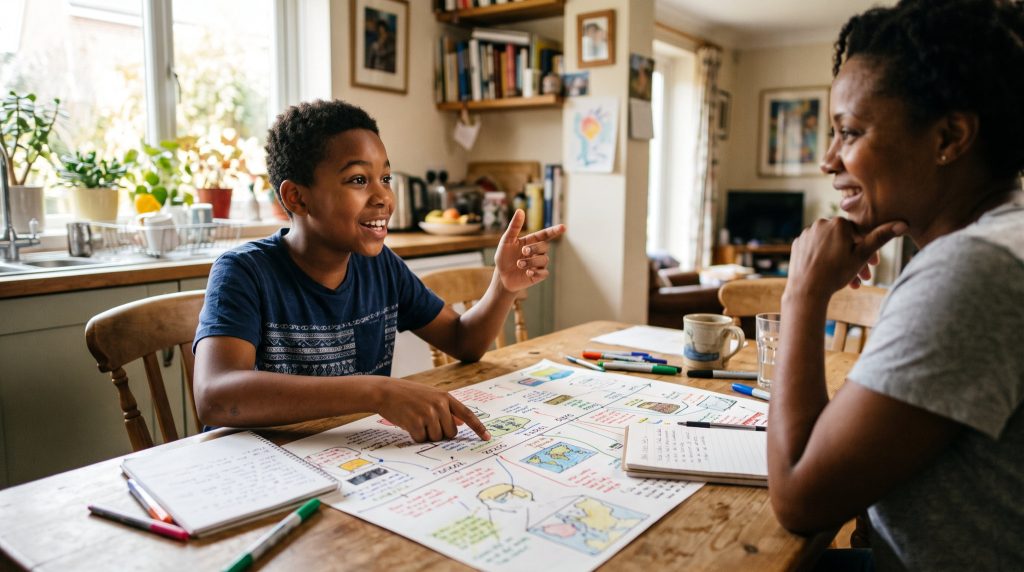
Create simple cause-and-effect maps.
The objective is not to test children constantly.
The objective is to encourage the kind of thinking that helps memories grow stronger.
The Real Measure of Learning
Engagement is valuable.
Boredom can certainly interfere with learning.
But engagement alone is not enough.
A child can enjoy a lesson and remember very little.
A child can be fascinated by history and still struggle with retention.
Learning requires more than exposure.
It requires encoding.
And encoding requires mental work.
That is why lesson completion is not the same thing as learning.
That is why recognition is not the same thing as recall.
And that is why some of the most effective homeschool practices involve children explaining, discussing, and reconstructing what they have learned.
Exposure starts learning.
It does not finish learning.
The question is not whether your child encountered history.
The question is whether they did something meaningful with it afterward.
That is where lasting learning begins.Several years ago, a homeschooling parent posted a simple question online.
Exposure Is Not Learning
Reading, watching, and listening can introduce children to history, but exposure alone does not guarantee lasting learning. Real learning begins when children explain, discuss, compare, question, and reconstruct what they have encountered.
Spot the Anachronism encourages this kind of active thinking. Instead of simply receiving information, children must observe carefully, evaluate evidence, notice details, and explain what they see. Those mental processes help transform familiarity into stronger, more durable understanding.
This Article Is Part Of A Larger Series
Question: Why doesn’t the information stick? My child forgets everything right after a lesson.
Current article: Article 2 of 11 — Foundation Cluster
This article explores one evidence-supported aspect of the larger question. Future articles examine additional research-supported approaches to increasing engagement with history.
Related Facebook Discussions
- See how historical realism emerges when multiple details begin working together as a connected system.
- Explore how ensemble realism trains us to notice more than the obvious subject of a scene.
- Discover why small imperfections often reveal more about a historical scene than its most obvious features.