The Test Said They Learned It. The Memory Says Otherwise.
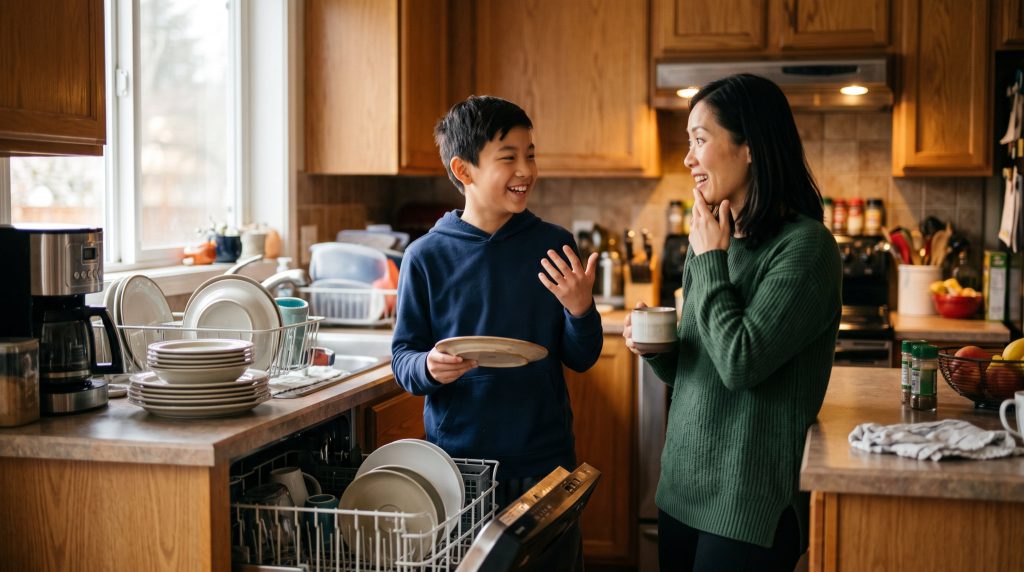
How can a child perform so well one day and remember so little later?
If the test said they learned it, why doesn’t the memory agree?
Many parents assume something must have gone wrong.
Perhaps the curriculum failed.
Perhaps the child was not paying attention.
Perhaps the lesson was not taught effectively.
But there is another possibility.
The apparent contradiction may not be a contradiction at all.
The test and the memory may have been measuring different things.
The Day Everything Looked Successful
Imagine a child finishing a lesson about the American Revolution.
They complete a worksheet.
They match vocabulary terms correctly.
They identify important historical figures.
They answer review questions at the end of the chapter.
When the chapter test arrives, they score ninety-five percent.
Most parents naturally interpret this as evidence of learning.
Why wouldn’t they?
The child clearly knew the answers.
The work demonstrated understanding.
The results were visible.
Success seemed obvious.
The problem is that immediate performance often tells us what a child can access right now.
It does not necessarily tell us what they will still remember later.
This distinction is easy to miss because successful performance feels like proof.
Yet memory is more complicated than that.
Why Immediate Success Can Be Misleading
One of the most surprising discoveries in learning science is that performance and learning are not always the same thing.
A child can perform well without creating durable memory.
This happens because recently encountered information feels unusually accessible.
The lesson is fresh.
The vocabulary has been seen repeatedly.
The examples remain familiar.
The answers feel obvious.
Under those conditions, success becomes much easier.
But ease can be deceptive.
Think about recognizing a face.
You may instantly recognize someone you met at a gathering last week.
Recognition feels effortless.
Now imagine trying to describe that person’s appearance in detail without seeing them.
That task is much harder.
The information is present in both situations.
The difference is how you are being asked to access it.
Many educational activities rely heavily on recognition.
Recognition creates the feeling of knowing.
Memory requires something more.
What Tests Often Measure
Many traditional assessments provide clues.
The worksheet contains prompts.
The review section provides context.
Multiple-choice questions offer possible answers.
Matching exercises narrow the options.
Even short-answer questions often appear immediately after instruction.
None of these tools are inherently bad.
They can provide useful information.
The problem arises when we assume they measure long-term learning.
Often they measure familiarity.
The child recognizes the correct answer when they see it.
The information feels known because it was recently encountered.
History instruction frequently creates this situation.
A student may correctly identify:
- George Washington
- Julius Caesar
- Cleopatra
- Abraham Lincoln
when presented with names and prompts.
Yet that same student may struggle to explain those individuals independently a week later.
The issue is not necessarily a lack of intelligence or effort.
The issue is that recognition and retrieval are different cognitive tasks.
Recognition is easier.
Retrieval is more demanding.
And retrieval tells us far more about memory.
What Memory Actually Measures
True retention reveals itself when information must be reconstructed without assistance.
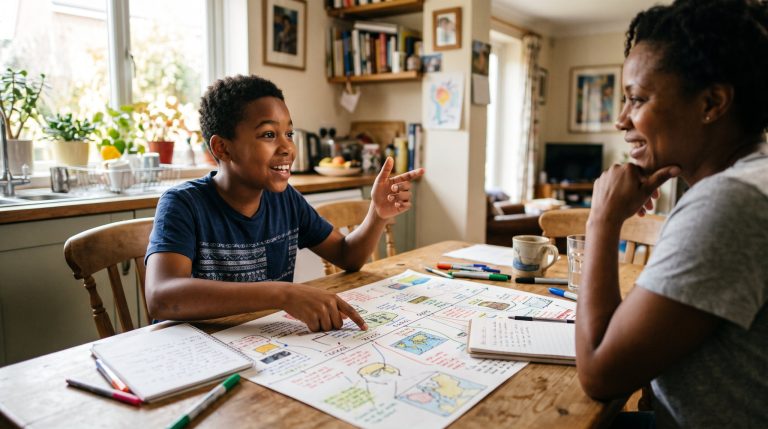
Can your child explain what happened?
Can they tell the story?
Can they describe the causes and consequences?
Can they connect the event to something studied earlier?
These questions require retrieval.
Nothing is provided.
No answer choices.
No hints.
No immediate cues.
The learner must bring the information back from memory.
That process is far more difficult.
It is also far more informative.
When children successfully retrieve information after time has passed, parents gain evidence that something durable remains.
The memory has survived beyond the immediate lesson.
It is accessible without external support.
That is the kind of learning most homeschool parents actually want.
Not temporary performance.
Lasting understanding.
History Provides a Perfect Example
History makes this distinction particularly visible.
Consider two students studying the fall of the Roman Empire.
The first student completes a review page successfully.
They identify vocabulary words.
They select correct answers from a list.
They earn a high score.
The second student is asked a week later:
“Why do you think the Western Roman Empire eventually collapsed?”
Now something different is happening.
The student must retrieve information.
They must organize ideas.
They must connect causes together.
They must explain events in their own words.
Which student demonstrates stronger evidence of learning?
The answer is not determined by the test score.
It is determined by what remains available after time has passed.
History is ultimately about understanding relationships, causes, consequences, and human decisions.
Those things become visible when learners can explain them independently.
A student who can reconstruct the story often understands more than a student who can merely recognize the correct answer.
The Better Question
Many homeschooling parents ask:
“Did my child get it right?”
That question is understandable.
But there is a better one.
Ask:
“Can my child retrieve it later?”
This shift changes how we think about learning.
Instead of focusing exclusively on immediate performance, we begin paying attention to what survives.
What does the child remember next week?
What ideas return during conversation?
What historical figures remain memorable?
What events can they still explain without looking at notes?
These observations often reveal more than chapter tests ever could.
They show us what has become part of the child’s long-term understanding.
What This Means for Homeschooling
This perspective can be surprisingly liberating.
Many parents blame themselves when forgotten information appears.
They assume the lesson failed.
They assume more review is necessary.
They assume they must start over.
Often that is not true.
Forgetting does not automatically mean learning failed.
It simply means memory is behaving normally.
The more useful response is to create opportunities for retrieval.
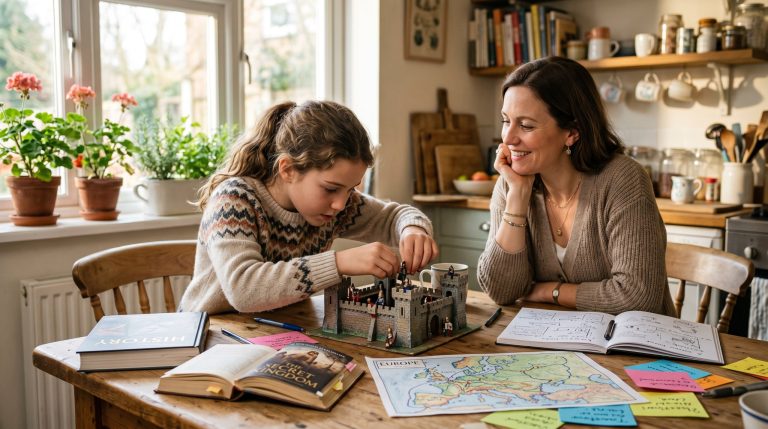
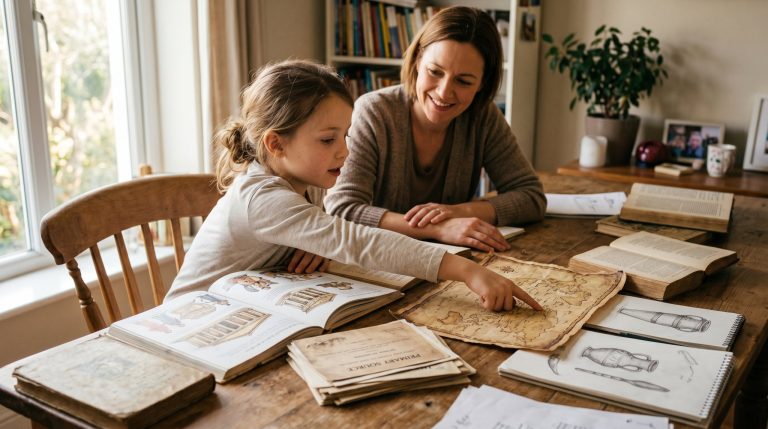
Ask for narration a day later.
Discuss the topic several days afterward.
Mix older material into new lessons.
Invite your child to reconstruct events from memory.
These activities reveal what remains and strengthen what is beginning to fade.
Most importantly, they provide a more accurate picture of learning.
Signs of Durable Learning
Parents looking for evidence of genuine retention should pay attention to moments that occur naturally.
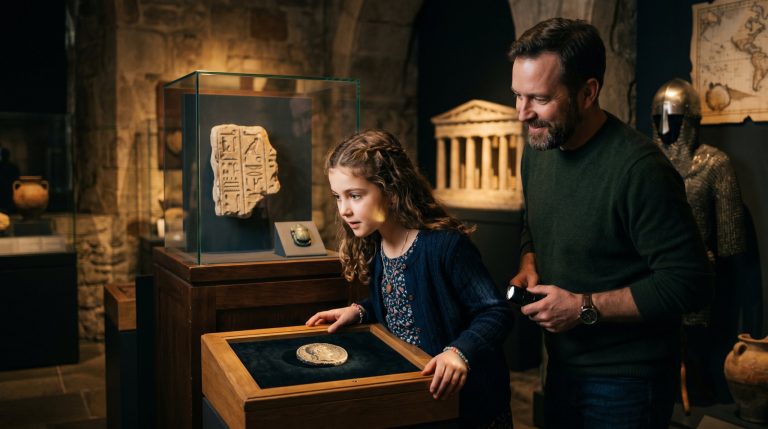
Does your child reference a historical event during another conversation?
Do they compare two civilizations without prompting?
Do they bring up a historical figure weeks after the lesson?
Can they explain a cause-and-effect relationship from memory?
These moments often indicate stronger learning than a perfect worksheet score.
They show that information has become available beyond the immediate lesson environment.
That is the kind of memory that supports future understanding.
The Success Was Real
The title of this article may sound discouraging.
It is not meant to be.
The test score was not meaningless.
The successful lesson was not a waste.
The child truly did know the material in that moment.
The mistake is assuming that immediate accessibility guarantees long-term retention.
It does not.
The success was real.
It simply measured a different stage of learning than many parents realize.
Understanding that distinction changes everything.
Instead of asking whether a child can answer correctly today, we begin asking whether they can remember tomorrow.
Instead of focusing entirely on performance, we begin paying attention to retention.
Instead of treating forgetting as failure, we treat it as information.
And that leads to a much more useful understanding of how learning actually works.
The next time your child aces a lesson and then forgets much of it later, remember this:
The problem may not be the child.
The problem may not be the curriculum.
The problem may not even be the learning.
The problem may simply be that the original measure of success was measuring the wrong thing.
Because learning is not ultimately about what a child can recognize today.
It is about what they can still retrieve when the lesson is long gone.
Retrieval Happens in the Conversation
A worksheet score tells you what a child can recognize today. Spot the Anachronism is built for something harder and more revealing: unassisted retrieval, prompted by you. When you sit down together and ask your child what looks wrong in a Roman scene, no answer choices are waiting to be recognized — they have to pull historical knowledge back from memory and explain to you why a detail doesn’t belong. Let them study it, wonder aloud, and reason through it while you ask follow-up questions. That shared back-and-forth is exactly the kind of durable learning this article argues chapter tests miss, and it shows you what your child can still explain days after the lesson.
This Article Is Part Of A Larger Series
Question: Why doesn’t the information stick? My child forgets everything right after a lesson.
Current article: Article 5 of 11 — Memory-Building Cluster
This article explores one evidence-supported aspect of the larger question. Future articles examine additional research-supported approaches to increasing engagement with history.
Related Facebook Discussions
- Real understanding shows when you can reconstruct a whole picture unaided, the way this exercise asks you to judge whether an entire Roman scene holds together.
- Genuine understanding moves past recognizing objects to explaining how they behave, like asking whether a marketplace feels physically contested by everyday use.
- The same shift from recognizing the obvious answer to explaining the whole picture appears when you ask whether a Roman street feels genuinely alive.