The Forgetting Curve Is Real: Why Your Child Forgets History-and What to Do About It

“How do I know if my child is actually retaining what they’ve learned in history?”
Sometimes that question becomes especially painful months after a unit has ended.
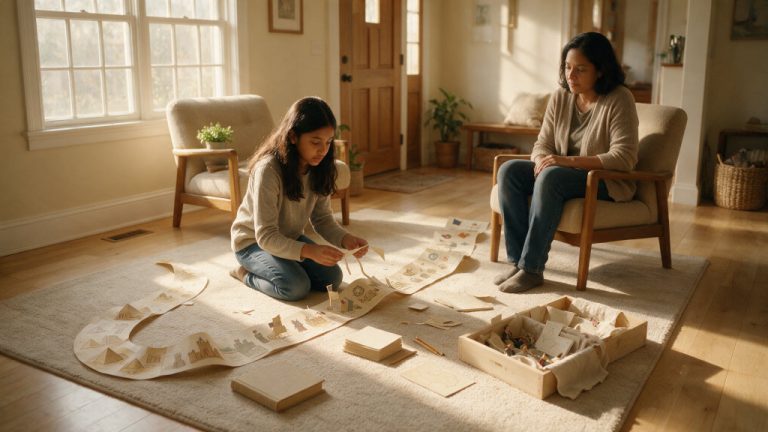
You spent weeks studying ancient Rome. Your child listened to stories, examined maps, learned about the Republic and Empire, and perhaps built a model, created a timeline, or narrated important events.
Later, you ask what your child remembers.
The answer is disappointing.
A few details return, but most names and dates seem gone. The political system is blurry. The emperors have merged together. Your child may even say, “I don’t remember studying that.”
It is easy to wonder whether all that time accomplished anything.
But learning is not valuable only when it can be reproduced immediately and completely. Historical study often leaves behind mental structures that continue shaping future understanding even after many details become difficult to recall.
Researchers commonly describe these structures as schemas.
A schema is an organized framework of knowledge. It gives new information somewhere to go. It acts like a set of mental pegs on which later learning can hang.
This article examines one specific part of the larger retention question:
What remains when a child appears to have forgotten most of a historical topic?
The answer is often more than parents can see.
The Fear Behind “They Forgot Everything”
When parents worry about retention, they are rarely concerned about one missing date.
The deeper fear is that the entire educational effort may have been wasted.
You may think:
- We spent months reading about this.
- My child understood it at the time.
- Now almost nothing is available.
- Perhaps the learning was only temporary.
- Perhaps I taught it badly.
- Perhaps history is simply not sticking.
Homeschooling can intensify this fear because parents are responsible for both instruction and evaluation. There may be no outside teacher, standardized report, or formal grade to provide reassurance.
Recall therefore becomes a tempting measure.
If the child remembers, learning seems real.
If the child does not, the value of the original study becomes uncertain.
The problem is that immediate, conscious recall is only one expression of memory.
A child may be unable to produce information on demand while still retaining familiarity, categories, expectations, patterns, and partially organized knowledge.
Those forms of learning are quieter.
They become visible when the child encounters related material later.
Why Forgotten Does Not Mean Lost
Memory is not simply divided into two categories:
- remembered
- erased
Knowledge can remain present in ways that are difficult to retrieve directly.
You have probably experienced this yourself.
You may read the name of a historical figure and suddenly recognize it, even though you could not have produced the name independently.
You may return to a subject after years and discover that the material comes back quickly.
You may understand a new explanation more easily because parts of it feel familiar, even though you cannot remember where you first learned them.
These experiences show that retrieval failure is not always the same as complete loss.
A child who cannot explain the Roman Republic from memory may still recognize the Senate, understand that Romans feared kingship, or grasp more quickly why later political thinkers admired republican government.
The knowledge may no longer be available as a polished answer.
But it may still shape comprehension.
This is one reason relearning is often faster than first learning. The child is not necessarily starting from nothing.
Earlier study may have created categories and connections that allow new information to be processed more efficiently.
What Researchers Mean by a Schema
A schema is a mental structure that organizes related knowledge.
Think of it as a framework, map, or set of pegs.
Without a framework, new information arrives as disconnected pieces.
A child hearing about a senate, republic, consul, dictator, and civil war for the first time must create categories for all of them.
The terms may seem unrelated.
After studying Rome, however, the child has at least a basic structure:
- governments distribute power in particular ways
- political systems can change
- rulers may gain power through military support
- citizens and elites may compete over authority
- republics can face crises
- empires must govern large territories
- succession can become unstable
Some of the details may fade.
But the framework remains available for later topics.
When the child later studies another republic, monarchy, empire, or civil conflict, the new information is not entirely unfamiliar.
There are already pegs.
The child can ask:
- Is this government similar to Rome’s?
- Did this ruler gain power in the same way?
- Did this empire face the same problems?
- Was this political crisis caused by succession?
- Did this society also fear concentrated power?
That is the practical value of a schema.
It turns future learning from isolated exposure into connected understanding.
Schemas Are Not Complete Knowledge
A schema should not be confused with mastery.
A child may possess a rough framework that contains gaps, errors, or oversimplifications.
For example, a child might remember that Rome changed from a republic to an empire but misunderstand how gradual and contested that transition was.
The framework is still useful, but it needs refinement.
New learning can add detail, correct misconceptions, and reorganize earlier ideas.
Schemas are therefore not finished products.
They are developing structures.
A child’s first understanding of empire may be simple:
“An empire is a large territory controlled by one ruler.”
Later study may add:
- multiple peoples
- administrative systems
- taxation
- military control
- cultural exchange
- resistance
- provincial government
- problems of communication
- contested identity
The original peg remains, but the knowledge hanging from it becomes richer.
This is how historical understanding accumulates.
The Rome Example
Imagine that a child studies ancient Rome at age seven.
The child learns about:
- the Republic
- the Senate
- Julius Caesar
- Augustus
- roads
- aqueducts
- the army
- the spread of Roman rule
- the decline of the Western Empire
By age twelve, many details are gone.
The child cannot remember the dates of the Punic Wars. The names of most emperors have disappeared. The distinctions among several political offices are unclear.
It would be easy to conclude that Rome was forgotten.
Then the child begins studying the Renaissance.
The influence of classical art and architecture makes immediate sense because Rome is already familiar.
The child studies the Catholic Church in medieval and early modern Europe.
Rome is not merely a location on a map; it already carries religious, political, and cultural meaning.
The child encounters republican political ideas.
The term “republic” is not completely new. It attaches to an earlier framework involving citizens, senators, laws, and fear of kingship.
The child studies European empires.
Questions about expansion, administration, armies, borders, taxation, and cultural influence arise more naturally because an earlier imperial model already exists.
The child examines neoclassical government buildings.
Columns, domes, civic architecture, and Roman symbolism are easier to interpret.
The seven-year-old did not retain every Roman fact.
But Rome remained in the background as a cultural and historical framework.
That earlier learning made later topics easier to recognize and connect.
The pegs were real.
Prior Knowledge Changes New Learning
Prior knowledge is one of the strongest influences on how easily people understand new information.
When a child already knows something related to a topic, new learning has somewhere to attach.
Consider the difference between these two situations.
One child encounters the concept of a republic for the first time while studying the founding of the United States.
Another child has previously studied the Roman Republic.
The second child may not remember consular terms, assemblies, or constitutional details. But the child already knows that:
- political power can be divided
- citizens may have formal roles
- elites may dominate institutions
- republics may distrust monarchy
- systems designed to limit power can still experience crisis
The child now has questions and categories available.
The new material can be compared with an existing example.
This does not guarantee correct understanding. In fact, comparison may initially produce inaccurate parallels.
But even imperfect comparison gives the parent and child something to refine.
Without prior knowledge, every idea must be constructed from the beginning.
With prior knowledge, the child can build through contrast, similarity, correction, and expansion.
Narrative Creates Strong Pegs
Stories are especially effective at creating schemas because they organize information into relationships.
A list of facts about the Roman Republic may be difficult to retain:
- Senate
- consuls
- assemblies
- legions
- provinces
- civil wars
A narrative connects those facts.
A successful general becomes loyal to his soldiers.
Political rivals fear his growing power.
The government orders him to surrender command.
He crosses a boundary with his army.
Civil war follows.
He gains control but is assassinated.
The attempt to restore the Republic produces further conflict.
The story creates sequence, motivation, causation, and consequence.
Even if the child later forgets exact names or dates, the underlying pattern may remain:
A political system became unstable because military power and personal loyalty overwhelmed its institutions.
That pattern becomes a strong peg.
It may later support the study of other civil wars, military governments, political revolutions, or constitutional crises.
Narrative history therefore does more than make lessons interesting.
It provides structure.
What Hidden Retention Looks Like
If schemas often operate beneath the surface, how can parents recognize them?
They may appear through several forms of indirect evidence.
Familiarity
A topic does not feel entirely new when it returns.
The child may say:
“I remember something about that.”
Recognition is weaker than full recall, but it still indicates prior learning.
Faster relearning
Material that once seemed difficult becomes easier to recover.
The child may need reminders but regain understanding quickly.
That speed suggests that earlier study created a foundation.
Stronger connections
The child links a new topic with something studied earlier.
“Was this like the Roman Republic?”
“Did this empire have the same problem with its borders?”
These connections show that older knowledge remains cognitively available.
Richer questions
The child asks questions shaped by prior exposure.
Instead of only asking what happened, the child asks about legitimacy, succession, evidence, government, or social hierarchy.
Earlier learning has created categories for inquiry.
Pattern recognition
The child notices recurring historical structures:
- empires overextend
- succession disputes create instability
- rulers use religion or architecture to support authority
- trade routes shape political power
- inequality contributes to unrest
- conquered peoples respond differently to imperial rule
These patterns may be more durable than individual examples.
Better contextual understanding
The child more quickly understands why people in a new historical setting behaved as they did.
Earlier knowledge provides expectations about institutions, beliefs, status, conflict, and material conditions.
Transfer
The child applies an older idea to a new period or situation.
Transfer is one of the strongest signs that knowledge has become part of a usable framework.
Historical-Learning Application
Suppose your child studied ancient Egypt several years ago.
Most of the pharaohs are forgotten. The major dynasties have blurred. Dates are no longer available.
Later, the child studies another river civilization.
You ask:
“What kinds of things would we want to know about the river?”
The child responds:
- Did it flood regularly?
- Was the flooding predictable?
- Did people use it for travel?
- Did farming depend on it?
- Did the ruler control the water or farmland?
- Did cities grow along it?
Those questions reveal an existing schema.
The child may not explicitly remember every Egyptian lesson, but the earlier study created a framework connecting geography with agriculture, settlement, transportation, political authority, and social development.
The new civilization is being interpreted through that framework.
This is genuine historical learning.
The knowledge is no longer merely a set of Egyptian facts.
It has become a way of examining civilizations.
That is more valuable than perfect recall of isolated details.
Schemas Support Historical Thinking
Historical thinking requires background knowledge.
A child cannot meaningfully compare two revolutions without knowing something about both.
The child cannot evaluate a source without understanding the context in which it was created.
The child cannot explain causation without recognizing relevant political, economic, social, and cultural conditions.
Schemas make these tasks possible.
They provide categories for asking:
- What kind of government is this?
- Who holds power?
- What institutions exist?
- What pressures are building?
- Which groups benefit?
- What evidence survives?
- How does geography shape events?
- What has changed?
- What remains continuous?
The richer the child’s background knowledge becomes, the more sophisticated historical reasoning can become.
This is why early exposure matters even when it does not produce permanent command of every fact.
Children are gradually building the mental world in which later historical thinking can occur.
Chronology Is Also a Schema
One of the most useful historical frameworks is a mental timeline.
Children do not need perfect dates to benefit from chronological structure.
They need a growing sense of:
- what came before what
- which societies overlapped
- how long developments lasted
- which events were separated by centuries
- how one period influenced another
A child may forget the exact date of the fall of Constantinople but still understand that it occurred long after the collapse of the Western Roman Empire.
A child may not remember when the Renaissance began but understand that it followed the medieval period and drew on renewed interest in classical learning.
These chronological pegs prevent history from becoming a pile of disconnected stories.
As new topics arrive, they can be placed into an expanding temporal structure.
The structure becomes more precise over time.
Cultural Familiarity Matters
Historical schemas are not only political or chronological.
Children also develop cultural familiarity.
After studying several civilizations, they begin recognizing that societies differ in:
- family structures
- religious beliefs
- architecture
- clothing
- labor systems
- status signals
- government
- warfare
- trade
- ideas about citizenship
- treatment of outsiders
- relationships with the environment
A child who has studied Rome may later recognize Roman influence in language, law, architecture, religion, and political symbolism.
A child who has studied Egypt may more easily understand how monuments communicate authority and religious meaning.
A child who has studied medieval society may recognize the relationships among land, protection, labor, and political obligation.
Specific facts support these frameworks, but the frameworks eventually become larger than the original facts.
They shape how the child sees historical worlds.
The Limits of the Peg Metaphor
The peg metaphor is useful, but parents should not use it to assume that all forgotten learning remains intact.
Sometimes a child truly did not understand the original material.
Sometimes the framework that remains is inaccurate.
Sometimes earlier teaching created a stereotype rather than a useful schema.
For example:
- Rome becomes nothing but gladiators and emperors.
- Egypt becomes nothing but pyramids and mummies.
- Medieval Europe becomes nothing but castles and knights.
- Indigenous societies become a single undifferentiated culture.
- Revolutions become simple stories of oppressed people defeating villains.
These are schemas, but they are weak or misleading ones.
Future learning should refine them.
Parents should therefore look not only for the existence of pegs but for their quality.
Does the child’s framework become more complex?
Are exceptions and variations becoming visible?
Are simplistic categories being revised?
Does new evidence change earlier interpretations?
Healthy schema development includes correction.
Practical Takeaways for Homeschooling Parents
Expect details to fade.
Do not measure the value of a historical unit only by how many names and dates remain months later.
Look for familiarity.
A child who recognizes a topic or recovers it quickly has not necessarily lost the learning.
Notice faster understanding.
Related topics may become easier because an earlier framework already exists.
Ask connection questions.
Useful prompts include:
- Does this remind you of anything we studied before?
- Have we seen another ruler face this problem?
- How is this empire similar to Rome?
- What is different from Egypt?
- Where would this fit on our timeline?
- Have we encountered this political idea before?
Revisit earlier topics through new ones.
Connections strengthen both old and new knowledge.
Use narrative-rich instruction.
Stories organize people, events, motivations, and consequences into memorable structures.
Preserve chronology.
Timelines help new learning attach to an expanding sense of historical sequence.
Encourage comparison.
Comparisons make schemas visible and allow parents to correct oversimplifications.
Expect frameworks to develop.
A young child’s understanding will be simple. Later study should add complexity, evidence, and qualification.
Correct weak schemas.
If a child’s understanding has become stereotyped or inaccurate, treat that as a foundation to rebuild rather than proof that all prior learning was useless.
Value relearning.
Returning to a topic is not evidence that the first study failed. Relearning often strengthens and reorganizes the original framework.
Watch for transfer.
The strongest evidence may appear when a child applies an old historical idea to a new topic.
Most importantly, evaluate learning over years rather than isolated moments.
History education is cumulative.
The effect of an early unit may become most visible much later.
Conclusion
A child can forget many historical facts without losing all the value of the original learning.
Earlier study creates familiarity, categories, patterns, timelines, cultural expectations, and causal frameworks.
These are schemas—the mental pegs that help future knowledge find a place.
They may not appear when a parent asks for a date or a name.
They become visible when a child learns a related topic more quickly, recognizes a recurring pattern, asks a richer question, or connects one historical period with another.
This does not mean that recall is irrelevant or that all forgotten material remains safely preserved. Historical knowledge still needs review, correction, and expansion.
But apparent forgetting is not proof that the work was wasted.
The child who seems to have forgotten Rome may later understand republics, empires, classical influence, religious institutions, political symbolism, and architecture more easily because Rome is already present in the background.
Learning can remain active even when memory appears quiet.
That perspective does not completely answer the larger question of historical retention. Parents still need ways to observe learning, strengthen memory, and assess growth.
It does, however, answer one of the most painful fears beneath that question.
The foundation may still be there.
The pegs are real.
Give Those Mental Pegs Something New to Hold
When facts fade, children need opportunities to use the understanding that remains. A Spot the Anachronism subscription delivers a new visual history challenge each month, prompting your child to retrieve prior knowledge, compare evidence, recognize cultural patterns, and explain what does not belong. It turns quiet familiarity into active historical judgment – and gives you visible evidence that those mental pegs are still supporting new learning.
This Article Is Part Of A Larger Series
Question: How do I know if my child is actually retaining what they’ve learned in history?
Series Position: Article 7 of 11
This article explores one evidence-supported aspect of the larger question. Readers interested in the full answer should explore the complete series.
Related Facebook Discussions
- A related discussion shows how asking who made, paid for, handled, and maintained an object creates a reusable framework for understanding material culture.
- Another discussion shows how brick, plaster, stone, pigment, and wear can replace the familiar white-marble stereotype with a richer mental model of Rome.
- A third discussion explores how hairstyle can carry cultural information about age, status, labor, wealth, and identity before a child consciously reads the architecture around it.