What makes a good family Christmas card photo?
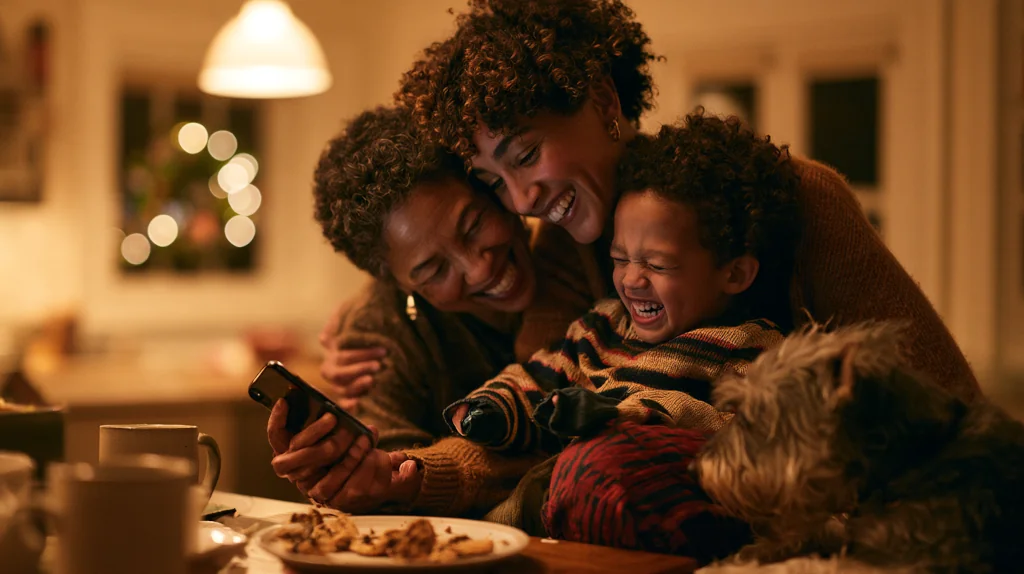
It is late, and you are scrolling through forty pictures from this afternoon.
In almost all of them, your two-year-old is looking anywhere but the camera.
Then there is one where he is laughing so hard his eyes are shut, and the dog is licking his ear.
Nobody is looking at the lens.
It is the only one that looks like your family.
A good card photo is one where everyone is recognizably themselves.
Everyone smiling at the camera at once is optional.
That matters for a question parents ask every year: “Do your toddlers give you a hard time taking photos ? Especially this holiday season of Xmas cards . Our 2 year old won’t let us”
Part of the answer is that the photo may not need what you think it needs.
This article explores one part of the larger question: what a family Christmas card photo actually has to do.
Key Takeaways
- A family card photo succeeds when each person looks like themselves and the family feels like itself.
- Everyone smiling at the camera at the same moment is one way to get there, not the only way.
- Candid, imperfect pictures often show a family more truly than a stiff pose.
- People who receive cards do not agree on a single ideal card.
- Choosing the standard first makes choosing the photo much easier.
The test most parents set
Without really deciding to, many parents hold every holiday photo to the same test.
Everyone in the frame.
Everyone looking at the camera.
Everyone smiling.
All at the same instant.
With a two-year-old in the family, that test is very hard to pass.
The previous article in this series looked at why.
This one asks a different question.
Is that the right test?
A good photo is not the same as a true one
A technically good photo has everyone facing forward, eyes open, expressions neat.
A true photo shows who the people in it really are.
Sometimes those are the same picture.
Often they are not.
Many people have a formal portrait somewhere in which everyone looks fine and nobody looks quite like themselves.
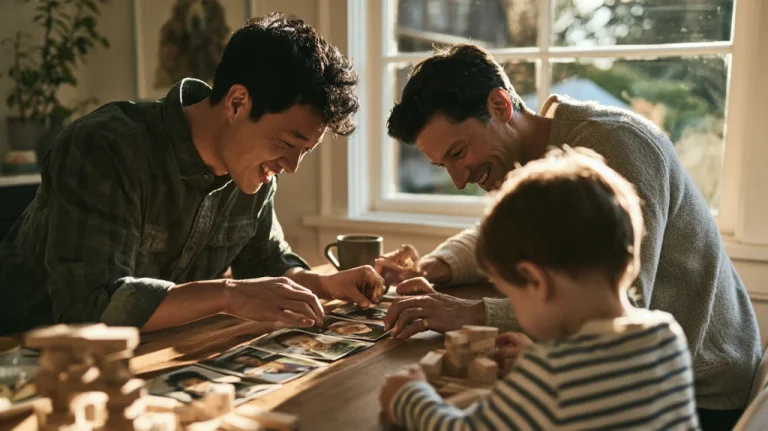
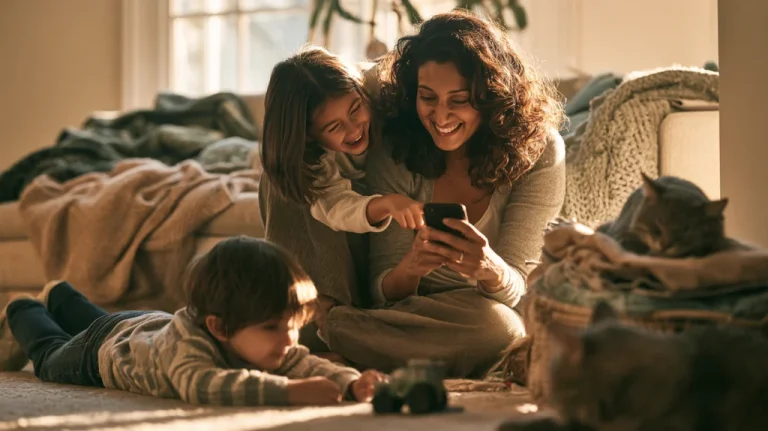
Many people also have a blurry, crooked snapshot they would never give up, because it caught something real.
Photographers who work with families and children tend to point in the same direction.
They often recommend catching natural moments between people rather than holding everyone in a pose.
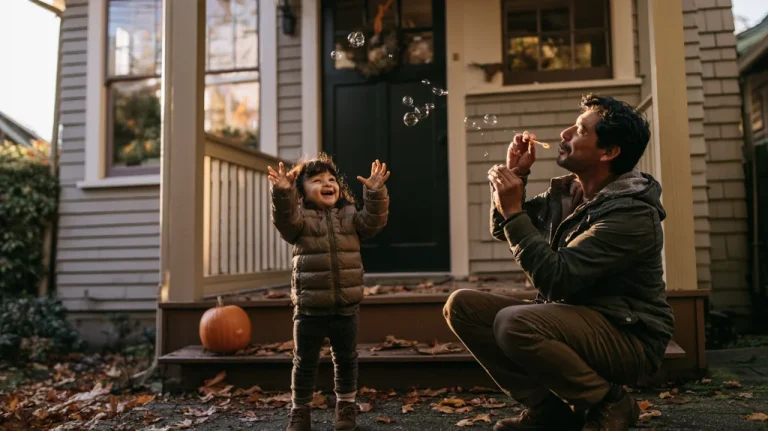
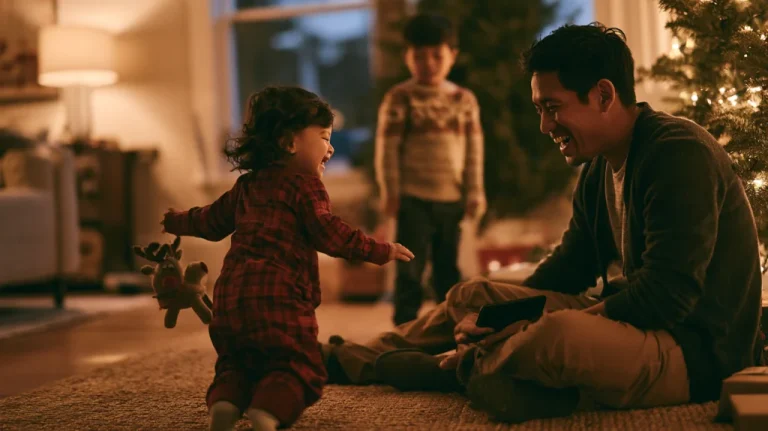
A laugh, a hug, or a familiar expression can say more about a family than a lined-up smile.
That is advice from practice rather than a controlled study.
But it matches what many parents already feel when they scroll past the perfect shot and stop at the messy one.
What people actually recognize
Think about how you recognize someone you love in a picture.
It is rarely the pose.
It is the particular way your son scrunches his nose.
The way your mother tilts her head when she laughs.
The way the dog always ends up leaning on someone.
Those details are a bit like handwriting.
You know it is theirs from the shape of it, not from how neat it is.
For a family card, those small true details may matter more than whether everyone was facing the same direction.
There is no single ideal card
It is easy to imagine that recipients are judging the photo.
In practice, people who receive cards disagree about almost everything.
Some keep every family photo they are sent.
Some keep only the ones with a handwritten note.
Some enjoy them for the season and then recycle them.
Some prefer a single portrait, and some prefer a collage of the year.
That disagreement is useful.
It means there is no one correct card to miss.
There is only the card that feels right for your family.
Practical Takeaways
Before choosing a photo, choose the test.
For each candidate picture, it can help to ask:
- Does each person look like themselves? Not their best, just themselves.
- Would someone who knows us recognize this moment?
- Does it feel like our family this year?
- Is anyone left out in a way that would hurt? If so, a later article in this series looks at ways to include everyone without a group pose.
You may find that one of the pictures you set aside as a failure already passes.
Most importantly, give yourself permission to send the true photo instead of the tidy one.
Conclusion
This article does not settle how to get a holiday card when a two-year-old will not cooperate.
It answers one piece of that question: what the photo actually has to do.
The goal is a family that looks like itself.
Synchronized smiles are a bonus, not a requirement.
The rest of the series looks at how to get there, including whether everyone needs to be in one frame at all.
The perfect photo shows everyone smiling.
The right photo shows everyone being themselves.
A Card Where Everyone Looks Like Themselves
If the photo that feels most like your family is never the one where everyone is smiling at the camera, a Hawkes’ Impossible Portraits holiday card starts from that same idea: your real family, unmistakably themselves. Each person is added from their own picture, so nobody has to hold a pose at the same moment as anyone else, and every portrait gets an automatic identity check. The Founder box is $19.99 for 10 premium folded 7×5 cards on heavyweight 130 lb silk-coated stock with premium envelopes; shipping and tax are added at checkout. See the before-to-after examples and choose a Christmas, Hanukkah or Kwanzaa scene.
FAQ
Does a Christmas card photo need everyone looking at the camera?
No. A card photo works when each person is recognizable and the family feels like itself. Eye contact with the camera is one way to get there, not a requirement.
Are candid photos acceptable for a Christmas card?
Yes. Many photographers recommend capturing natural moments, and a laugh or hug can show a family more truly than a stiff pose.
What do people who receive cards actually want?
They do not agree. Some keep family photos, some value handwritten notes, and some prefer simpler cards. There is no single ideal.
How do I choose between several imperfect photos?
Pick the standard first. Ask whether each person looks like themselves and whether the picture feels like your family this year.
This Article Is Part Of A Larger Series
Question: Do your toddlers give you a hard time taking photos ? Especially this holiday season of Xmas cards . Our 2 year old won’t let us
Current article: Article 2 of 13 – Foundation article
This article explores one evidence-supported aspect of the larger question.
Readers interested in the full answer should explore the complete series.