
The Exact Prompts That Keep Katanas Out of Ancient Rome
Four months. 1,106 images. Nine documented failure categories. One pipeline that fixes all of them.
AI image generation fails at historical accuracy in predictable, systematic ways. These documents are the complete workflow built to correct those failures — the generation template, the structured audit system, and the corrective re-prompting architecture behind the Vault of Ages catalog.
They are free. They are the real documents, not a simplified version. Use them, adapt them, and build something historically accurate.
Here’s the exact correction loop:
- Generate with constraints
- Audit for repeatable failures
- Feed corrections back
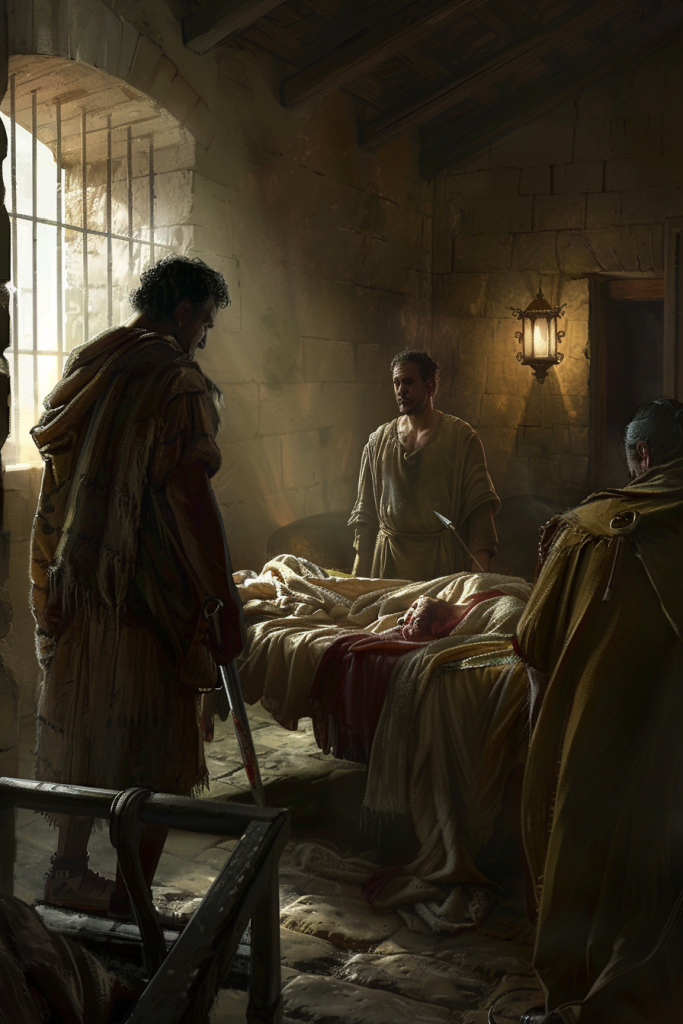
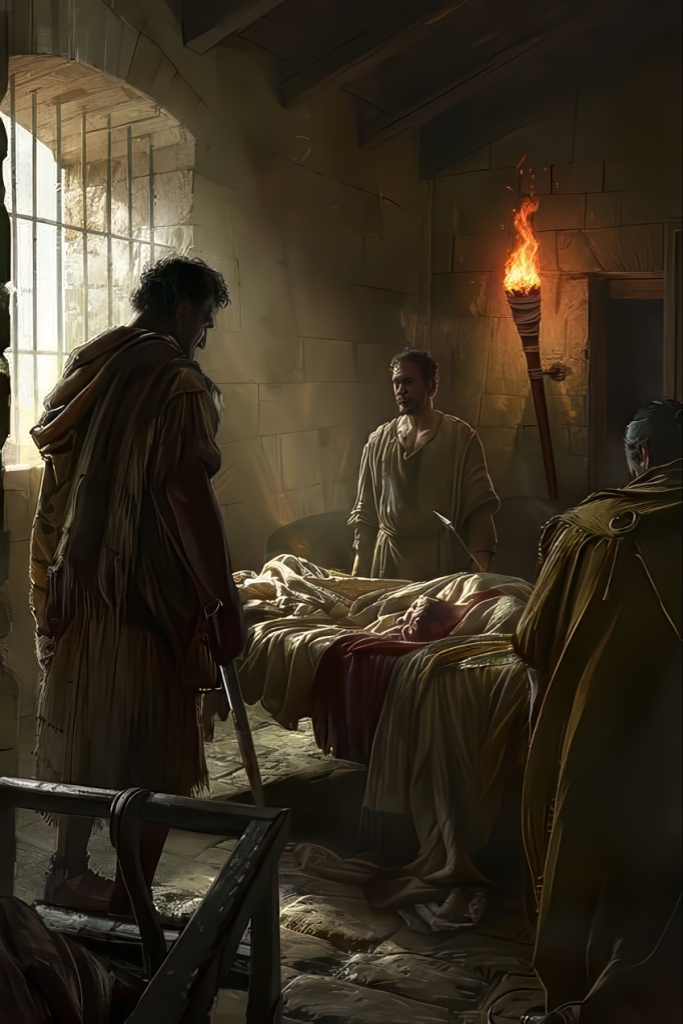
AI output: Roman interior scene → Victorian glass-enclosed gas lamp
Correction: Roman oil lamp, no glass, no conduit, flame lighting only
Key rule:
Vague negatives don’t work — you must describe the correct replacement.
AI Doesn’t Know the Difference Between Ancient Rome and Medieval Euro-pe
Left to its own devices, Midjourney produces imagery that looks historical until you look carefully. Then you notice the katana on the Roman legionary. The Gothic pointed arch in the forum. The Victorian gas-bracket lantern with glass panels in a 1st century interior. The gladiator with an MMA fighter’s physique.
These aren’t random failures. They’re systematic — the same nine categories, appearing consistently, across every generation session. Systematic failures have systematic solutions.
The three documents below are those solutions. They were built by running them across 1,106 images and refining against every failure that appeared. The pipeline they form — generate, audit, correct — reduces anachronism rates dramatically and produces a curated catalog that can withstand scrutiny from the Roman history community.
“AI shows what people think Rome looked like, not what it actually looked like. These prompts fix that.”
L. M. Hawkes
Three Documents. One Complete Pipeline.
🏛 The Initial Generation Prompt
The Midjourney template that starts every image right
The generation template that carries the full Roman accuracy constraint set into every Midjourney prompt — lighting, clothing, armor, weapons, architecture, materials, symbols, hairstyle, and gladiator body type. Structured as a constants layer and a period-specific accuracy layer so you know exactly what to keep and what to replace when adapting for a different historical period.
What’s inside:
- The style and atmosphere frame that produces photographic realism with period-accurate visual language
- The complete Roman accuracy constraint set, organized by category
- The Midjourney switch configuration optimized for accuracy-constrained work
- A fully assembled example prompt ready to adapt
🔍 The Audit Prompt
The structured evaluation system that catches what the generation prompt misses
Submit this to Claude with up to 15 generated images. It runs every image through a layered evaluation sequence — Visual Anchoring Pass, Evidence Confirmation Pass, Negative Knowledge Gate, Roman Historical Consistency Ruleset, AI Artifact Detection, Surface Authenticity Check — and returns a structured verdict, issue report, and showcase rating for each image.
What’s inside:
- The Visual Anchoring Pass that prevents evaluation of elements that aren’t visible
- The Evidence Confirmation Pass that eliminates false positives
- The Negative Knowledge Gate that enforces the discipline: visible evidence overrides suspicion
- The complete Roman Historical Consistency Ruleset across nine failure categories
- The canonical failure tag vocabulary — sixteen tags covering every documented anachronism and artifact type
- The Structured Issue Handoff Format that feeds directly into the corrective re-prompting step
- The showcase rating calibration guide (1–5 stars) with consistent, calibrated thresholds
⚙️ The Corrective Re-Prompting Prompt
The template that turns audit failures into prompt intelligence
The correction loop is the most powerful stage of the pipeline and the one most people skip. Rejected images don’t get discarded — their audit results feed into this template, which outputs a refined Midjourney prompt with targeted negative specifications for exactly what went wrong. Every rejected image makes the next generation smarter.
What’s inside:
- The three-input template structure (scene description + audit results + accuracy criteria)
- The complete accuracy criteria block that travels with every corrective prompt
- A worked example showing what good corrective output looks like — vague category exclusions versus precise visual language
- A note on borderline images and why they’re worth correcting rather than discarding
Get All Three Documents
The three documents work as a system. The generation template starts the image right. The audit catches what the template missed. The corrective re-prompting template fixes what the audit flagged. Download the complete package and start the pipeline running from the first image.
No email required. No account. Direct download.
© 2026 NSH Publishing, LLC. Free for personal and commercial adaptation with attribution to L. M. Hawkes / HawkesAdventures.com.
The Three-Stage Pipeline
Each document corresponds to one stage. Together they form a correction loop that compounds across every generation session.
Stage 1 — Generate
Start with the Initial Generation Prompt. The constants layer establishes photographic realism, period atmosphere, and palette. The accuracy constraints carry the Roman Historical Consistency Ruleset into every prompt. Low chaos settings minimize random anachronistic elements.
Stage 2 — Audit
Submit up to 15 images to Claude using the Audit Prompt. Every image goes through the Visual Anchoring Pass, Evidence Confirmation Pass, and full historical evaluation. Each failure is documented with visible evidence, a severity rating, and a repair implication using the canonical tag vocabulary.
Stage 3 — Correct
Rejected and borderline images feed into the Corrective Re-Prompting Prompt. The audit’s structured issue report becomes targeted negative prompt language — precise visual descriptions of exactly what went wrong and exactly what the correct version looks like. The corrected prompt goes back to Midjourney. The loop runs again.
“The correction loop turns audit failures into prompt intelligence. Every rejected image makes the next generation better.”
Built for Rome. Designed to Adapt.
The pipeline is period-agnostic. The structural layers — Visual Anchoring Pass, Evidence Confirmation Pass, Negative Knowledge Gate, Rating Calibration Guide, Structured Issue Handoff Format — do not change regardless of the historical period being generated. Only the Historical Consistency Ruleset changes.
The Roman ruleset in these documents covers the 1st–3rd century CE Roman world. When the Viking Age, ancient Greek, and ancient Egyptian prompt packages are released, they will publish only the delta — the specific ruleset changes for that culture — alongside notes on the failure categories unique to each period.
If you want to adapt these documents for a period not yet covered, the structure tells you exactly which layer to replace and which layers to keep identical.
The Catalog These Prompts Built
The Vault of Ages is a curated catalog of cinematic historical illustrations for ancient Roman gladiator culture — built to a historical accuracy standard that is documentable, defensible, and distinctive. Every image in the catalog passed the three-stage pipeline: structured generation, layered audit, and human enhancement review.
Showcase and four-star tier images are available under personal and commercial licenses. Commercial licenses permit derivative works — tabletop RPG supplements, game modules, interactive fiction, campaign settings, digital and print publications.
About L. M. Hawkes
L. M. Hawkes writes cinematic, historically grounded interactive gamebooks drawing from the warrior traditions of Rome, Greece, Japan, the Viking Age, and the great battles of antiquity. The Vault of Ages prompt library and image catalog are the infrastructure behind the Lanista Chronicles gamebook series and future titles in the L. M. Hawkes catalog.
The prompt documents on this page are the real working documents — not a simplified version prepared for publication. They are shared because the methodology works, because the Roman history community deserves better than what unconstrained AI produces, and because the accuracy standard they enforce is the brand.
Links:
Start the Pipeline
Download the complete prompt library and build the correction loop before you generate the first image — not after you’ve generated a thousand of them.
© 2026 NSH Publishing, LLC. All rights reserved. Prompt documents free for personal and commercial adaptation with attribution to L. M. Hawkes / HawkesAdventures.com.