The Science Behind Narration: Why Asking Your Child to “Tell It Back” Is the Best Assessment You Have
“How do I know if my child is actually retaining what they’ve learned in history?”
For many homeschooling parents, that question creates an uncomfortable tension.
You may not want to rely on quizzes, worksheets, or formal tests. You may have chosen homeschooling partly because you wanted learning to feel more natural and less driven by grades.
But you still need some way to know whether your child is learning.
You want evidence.
You want accountability.
You want to know whether the history lesson that seemed meaningful on Tuesday will still matter a week, a month, or a year later.
Narration offers one of the clearest answers to that problem.
When a child tells back what was learned—by speaking, writing, drawing, explaining, or reconstructing the story from memory—the child is doing more than demonstrating knowledge. The child is also strengthening that knowledge.
Modern cognitive science calls this process retrieval practice.
That means narration is not merely a traditional homeschool exercise or a Charlotte Mason custom. It is an application of one of the most reliable findings in memory research: learning becomes stronger when we actively retrieve information instead of only reviewing it.
This article examines that specific contribution to the larger question of historical retention.
Narration helps parents see what a child remembers, and the act of narrating helps the child remember it better in the future.
What Is Narration?
Narration is the practice of asking a child to tell back what was read, heard, observed, or studied.
A simple narration prompt might be:
“Tell me what happened.”
Other versions include:
“What do you remember?”
“Explain the story in your own words.”
“Tell me the most important parts.”
“What happened first, and what happened after that?”
The child then reconstructs the material from memory.
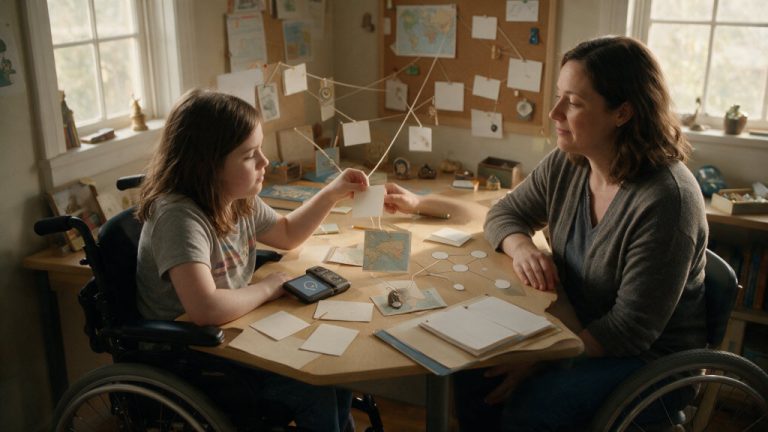
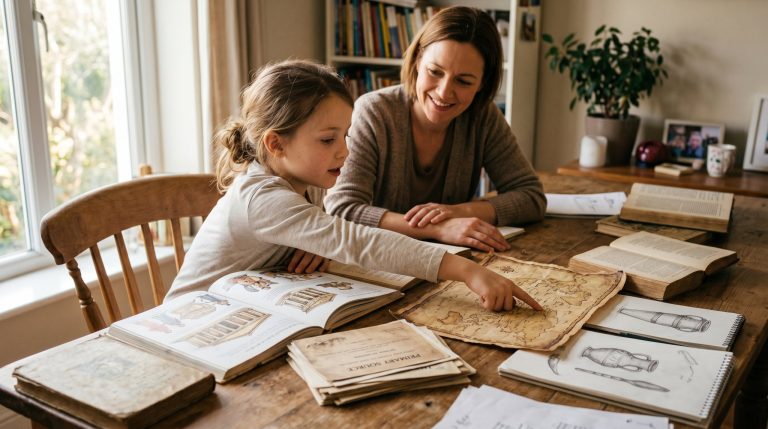
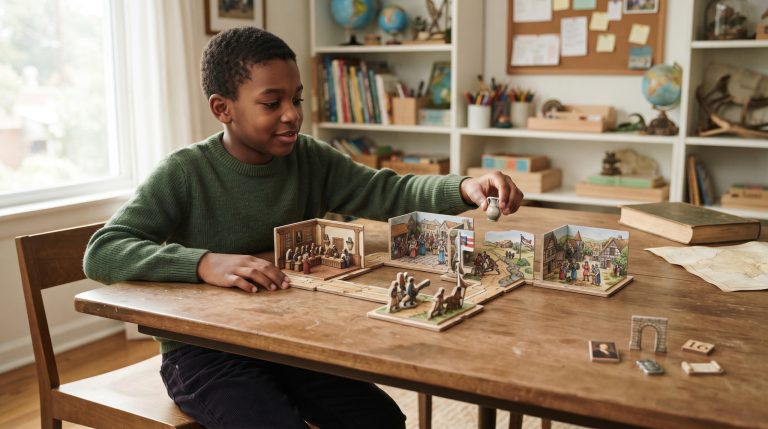
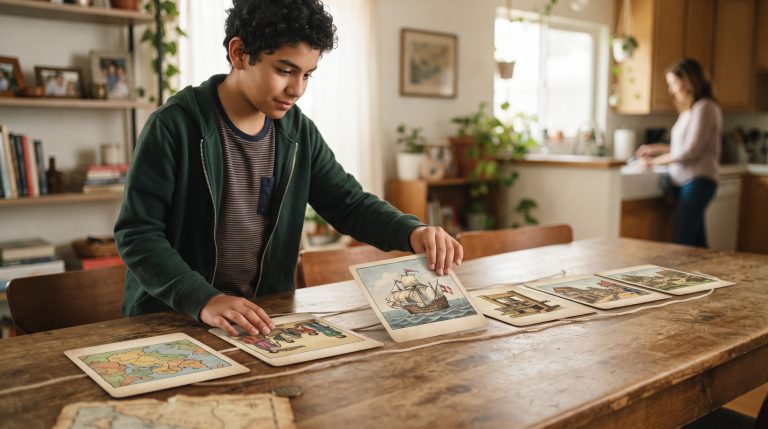
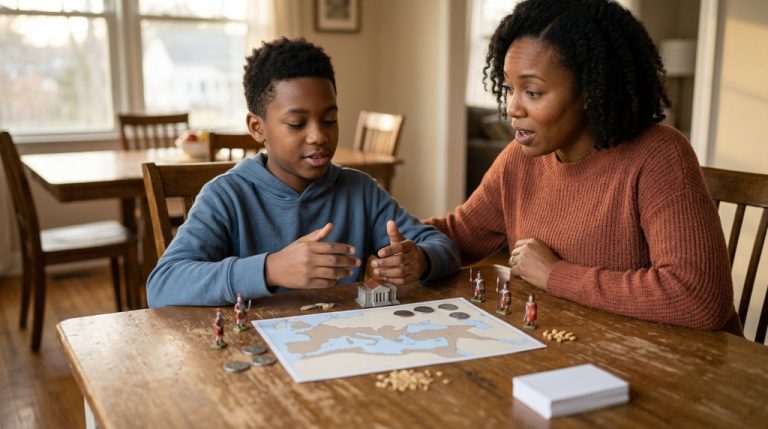
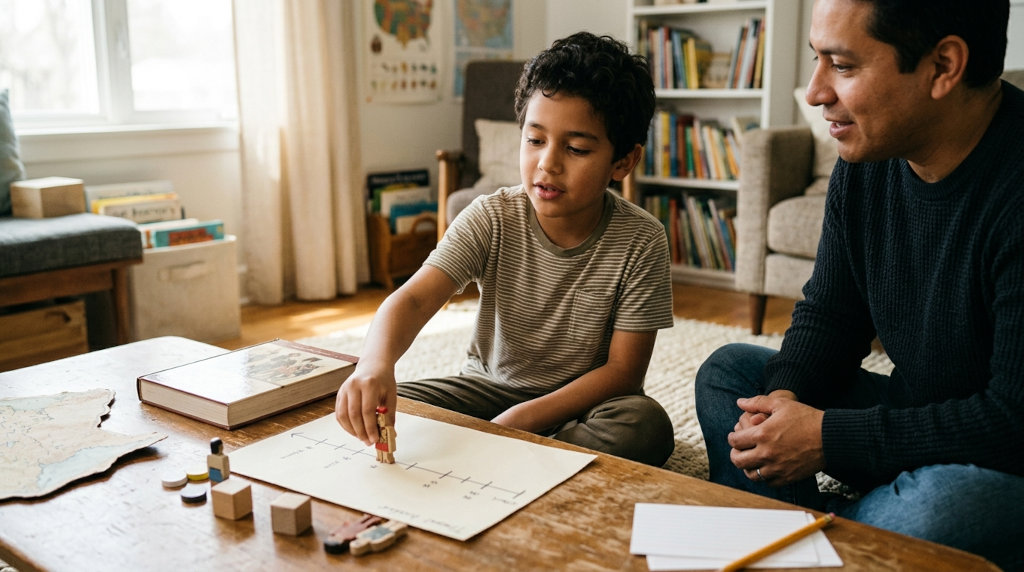
Narration may be oral, especially with younger children. An older child may provide a written narration. Some children may draw a scene and explain it, reconstruct a timeline, give a pretend news report, or teach the lesson back to a parent or sibling.
The form can vary.
The essential feature is that the child must retrieve and organize what was learned without simply copying it from the page.
Narration is sometimes confused with summarizing, but the two are not exactly the same.
A summary usually asks for a shortened account containing only the main points. Narration may include details, impressions, emotional reactions, remembered language, questions, and connections. It shows not only what information the child retained but how the child understood and organized it.
That difference makes narration especially useful in history.
History is not merely a collection of isolated facts. It involves sequence, motive, causation, consequence, perspective, and meaning. When children narrate, they reveal which parts of that structure they understood.
What Cognitive Science Calls Retrieval Practice
Retrieval practice means deliberately bringing information back to mind.
When a child closes the book and tries to remember what happened, that is retrieval.
When a student explains a concept without looking at notes, that is retrieval.
When someone answers a question from memory, reconstructs a sequence of events, or teaches an idea to another person, that is retrieval.
Research in cognitive psychology has repeatedly found that retrieving information strengthens long-term memory more effectively than simply rereading or reviewing the same information.
This finding is often called the testing effect.
The name can be misleading because it makes the benefit sound as though it comes from formal tests.
It does not.
The important mechanism is retrieval itself.
A multiple-choice quiz may produce retrieval. So may flashcards, practice questions, oral explanation, or narration. The format matters less than the mental action.
The child must reach into memory and reconstruct the learning.
That effort strengthens access to the knowledge.
Passive review can create familiarity. A child rereads a page and thinks, “Yes, I know this.” But recognition is not the same as recall.
The page itself supplies cues. The information feels familiar because it is visible.
Once the book is closed, the child must generate the information independently. That requires a more demanding form of memory.
Narration makes that process visible.
Why Retrieving Strengthens Memory
Memory is not a storage box that simply fills with information.
Knowledge becomes more durable when the brain repeatedly uses it.
Each act of retrieval reinforces the pathway that makes the information accessible. It also helps organize the knowledge and connect it with other ideas.
Imagine a child studying the causes of the American Revolution.
During the lesson, the child encounters taxation, colonial representation, British debt, trade restrictions, protests, political ideas, and escalating conflict.
Rereading those points may increase familiarity.
Narrating them requires the child to decide how they relate.
The child might say:
“Britain needed money after the war, so it tried to tax the colonies. The colonists thought that was unfair because they did not have representatives in Parliament. At first they protested, but the conflict kept getting worse.”
That narration strengthens more than separate facts.
The child has retrieved a causal chain.
The information is being reconstructed into a coherent explanation.
This is one reason narration can be especially effective for history. Historical learning depends heavily on relationships among events. Retrieval forces the child to rebuild those relationships.
Narration also exposes gaps.
A child may remember that colonists were angry but forget why Britain imposed the taxes. The parent now knows where understanding is incomplete.
That gap is useful information. It does not mean the narration failed. It means the narration performed its assessment function.
Narration and Retrieval Practice Are the Same Process
The language comes from different educational traditions, but the underlying action is remarkably similar.
Charlotte Mason educators have long asked children to narrate because the practice requires attention, ownership, and active reconstruction.
Cognitive psychologists describe the benefits of free recall and retrieval practice.
In both cases, the learner encounters material and then attempts to reproduce its meaning from memory.
Narration is therefore not valuable merely because it is conversational or child-friendly.
It is valuable because it engages a powerful memory process.
The child is not simply hearing the lesson again.
The child is using memory to rebuild it.
That is the central insight.
Narration works because remembering is itself part of learning.
Narration Measures Learning and Improves It
Most assessments are designed primarily to measure.
A quiz asks whether the student knows the answer.
A worksheet checks whether the student can complete a task.
A test records performance at a particular moment.
Narration does something more.
It measures learning while also strengthening it.
When a child narrates, the parent hears what remains available in memory. At the same time, the act of retrieval makes that memory more durable.
This is an unusual advantage.
The assessment is not separate from the learning process. It becomes part of the process.
A child who narrates the fall of Rome is not merely proving that some understanding exists. The child is rehearsing the sequence, causes, and meaning of the event.
That rehearsal increases the likelihood that the knowledge will remain accessible later.
This is especially useful in homeschooling because assessment does not need to interrupt the lesson or transform it into a formal testing event.
A short narration can happen after a reading, during lunch, in the car, while looking at a map, or several days after the original lesson.
It can feel like a conversation while still producing meaningful evidence.
Why Narration Can Reveal More Than Traditional Assessments
Traditional assessments can be useful, but they often narrow the kind of knowledge a child is allowed to show.
A worksheet may ask:
Who was Julius Caesar?
When did the Roman Republic end?
What was the Senate?
These questions check particular facts.
Narration asks the child to reconstruct the larger picture.
“Tell me what was happening in Rome when Julius Caesar gained power.”
That prompt may reveal whether the child understands political instability, military loyalty, rivalry among leaders, fear of dictatorship, and the collapse of republican norms.
The child may forget a name or date while showing substantial understanding.
Narration also reduces the risk that a child can succeed through guessing, recognition, or memorized phrasing without deeper comprehension.
A multiple-choice answer may be correct because one option looks familiar.
A narration requires the child to generate an account.
The child must select, organize, and express what seems important.
That makes narration especially useful for evaluating historical understanding.
Narration Is Not the Same as Interrogation
Narration works best when it invites reconstruction rather than creating pressure.
There is a significant difference between:
“Tell me what happened.”
and:
“What was the date? Who was the king? What happened next? No, that’s wrong. Try again.”
The first prompt opens space for recall.
The second can quickly become an oral test.
When parents interrupt frequently, correct every detail, or guide the child through a series of narrow questions, the child may stop reconstructing the lesson independently.
The parent begins doing much of the retrieval work.
This does not mean errors should never be corrected. Accuracy matters.
But the first purpose of narration is to hear what the child can produce.
Parents can listen first, then clarify or revisit important misunderstandings afterward.
The sequence matters.
Let the child retrieve before supplying the missing information.
What Parents Should Listen For
A useful narration is not judged only by the number of facts included.
Parents should listen for several kinds of evidence.
Key events
Does the child remember the central sequence?
The narration does not need every detail, but the major events should appear in a reasonably coherent order.
Cause and effect
Can the child explain why something happened or what resulted from it?
A child who says, “The people rebelled because the taxes kept increasing,” is showing more than simple recall.
Connections
Does the child link the lesson with something studied earlier?
The child may compare one ruler with another or connect a political conflict to a previous civilization.
Historical vocabulary
Does the child use terms such as empire, citizen, rebellion, alliance, reform, dynasty, or trade accurately?
Natural use indicates that the concepts are becoming part of the child’s understanding.
Human motivation
Does the child explain why historical people acted as they did?
A narration that includes fear, ambition, loyalty, survival, religious belief, or political pressure shows interpretive thinking.
Significance
Does the child identify what seemed important?
Children often reveal understanding through what they choose to emphasize.
Questions and uncertainty
Does the child notice something confusing or incomplete?
A statement such as “I don’t understand why the general obeyed him” can be evidence of engagement rather than failure.
Transfer
Does the child connect the material to another historical period, a current event, literature, or everyday experience?
That application is strong evidence that the knowledge is becoming usable.
Historical-Learning Application
Suppose your child has just read about the assassination of Julius Caesar.
A recall-style assessment might ask:
On what date was Caesar assassinated?
Who participated in the conspiracy?
Where did the assassination occur?
Those facts have value.
But narration can reveal a broader level of understanding.
You ask:
“Tell me what happened and why people turned against Caesar.”
Your child responds:
“Caesar had become very powerful after winning the civil war. Some senators were afraid he wanted to become a king, and Romans were suspicious of kings because of their earlier history. The conspirators thought killing him would restore the Republic, but instead it caused more fighting.”
This narration provides evidence of several kinds of learning.
The child remembers the main event.
The child understands the political context.
The child identifies the conspirators’ motivation.
The child connects Roman fear of kingship with earlier history.
The child recognizes an unintended consequence.
A few dates or names may be missing, but the narration demonstrates meaningful historical retention.
Now imagine asking the child to narrate again several days later.
The second narration may be shorter. Some details may disappear. But the child must retrieve the structure again.
That delayed narration both tests durability and strengthens it.
The parent can then ask one or two open questions:
“Why do you think the conspirators were so sure the Republic would return?”
“What happened because they misunderstood the situation?”
Those questions deepen the historical discussion without turning the exchange into a quiz.
Narration Can Take Many Forms
Narration does not need to look the same for every child or every age.
Oral narration
The child tells the lesson back aloud.
This is often the simplest form and works well for younger children or children who think more easily through speech.
Written narration
The child writes an account from memory.
This can reveal both historical understanding and the ability to organize ideas in writing, though writing difficulty may sometimes hide what the child actually knows.
Drawing and explaining
The child draws an event, building, map, or sequence and then explains the drawing.
The explanation is essential. The drawing becomes a support for retrieval rather than merely an art activity.
Timeline narration
The child places several events in order and explains what connects them.
This is especially useful for chronology and causation.
Map narration
The child uses a blank or simple map to explain movement, geography, settlement, invasion, or trade.
Historical news report
The child reports on an event as though speaking to an audience at the time.
This encourages selection of key facts and explanation of significance.
First-person narration
The child recounts an event from the perspective of a historical person.
This can develop perspective-taking, though parents should distinguish imaginative reconstruction from known evidence.
Teach-it-back narration
The child explains the lesson to a parent, sibling, stuffed animal, or imaginary class.
Teaching requires active organization and often exposes gaps clearly.
The goal is not novelty for its own sake.
The goal is retrieval.
Delayed Narration Shows What Lasts
Immediate narration can reveal attention and initial understanding.
Delayed narration reveals more about retention.
A child may narrate immediately after a lesson using information that is still active in short-term memory. Asking for another narration a day or several days later requires more durable retrieval.
Delayed narration does not need to cover every lesson.
Parents might occasionally ask:
“What do you remember from the chapter we read on Monday?”
“Tell me again why the colonies and Britain came into conflict.”
“What stands out from our study of ancient Egypt last week?”
The purpose is not to catch the child forgetting.
Forgetting is normal.
The purpose is to observe what remains, strengthen retrieval, and identify what may need to be revisited.
A sparse delayed narration can still be useful. It shows which parts of the lesson were most durable and which parts need more connections or review.
Narration and Different Learners
Narration is flexible, but parents should distinguish memory from the demands of the response format.
A child may understand a lesson but struggle to express it orally.
Another may speak fluently but find written narration difficult.
A child with slower processing may need quiet thinking time before beginning.
A younger child may offer only a few sentences.
A child who becomes anxious when put on the spot may narrate more effectively during a walk or while drawing.
These differences do not invalidate narration.
They mean the parent should choose a form that allows the child’s historical understanding to become visible.
The question is not whether every child can produce the same kind of polished narration.
The question is whether the child can retrieve and reconstruct the material in an appropriate form.
Practical Takeaways for Homeschooling Parents
Begin with simple, open prompts.
“Tell me what happened.”
“What do you remember most?”
“Explain this as though I had not read it.”
Avoid giving too many hints before the child begins. Hints reduce the amount of independent retrieval.
Listen before correcting. Make brief notes about major strengths, gaps, and misunderstandings, then address them after the narration.
Do not require every detail. Focus first on whether the child understood the main sequence, causes, relationships, and significance.
Use narration regularly but not mechanically. It should become a normal part of learning rather than a constant performance demand.
Vary the form when useful. Oral narration, drawing and explaining, timeline narration, and teach-it-back activities all use the same central mechanism.
Try occasional delayed narration. Asking for a retelling several days later provides stronger evidence of long-term retention than immediate recall alone.
Notice development over time. A young child’s narration may be brief and concrete. Older children may increasingly include causation, comparison, evidence, and interpretation.
Treat gaps as information. A forgotten point shows what may need review. It is not proof that the lesson was wasted.
Most importantly, remember that the benefit comes from the child doing the remembering.
The parent’s role is to invite, listen, and observe.
Conclusion
Homeschooling parents do not need to choose between meaningful learning and educational accountability.
Narration offers both.
When children tell back what they have learned, parents gain direct evidence of what remains in memory. They can hear whether the child understands the sequence, causes, people, conflicts, and significance of historical events.
At the same time, the act of retrieving that knowledge strengthens future retention.
That is why narration is more than an informal conversation and more than a traditional homeschool practice.
It is retrieval practice.
It uses the same cognitive mechanism that makes testing effective, without requiring the anxiety, rigidity, or narrowness of many formal assessments.
Narration does not answer every question about historical retention. It cannot replace all review, discussion, observation, or other forms of assessment. It also does not guarantee that every detail will remain permanently available.
But it makes learning visible while helping that learning become more durable.
When your child can reconstruct the story, explain what happened, and tell you why it mattered, you are not merely hearing evidence of memory.
You are hearing memory being strengthened.
Turn “Tell Me What You Remember” Into a Visual History Challenge
Narration strengthens memory because your child must retrieve, organize, and explain what they understand. Spot the Anachronism gives them a compelling reason to do exactly that: examine a historical scene, decide what does not belong, and explain the evidence behind their conclusion. A new visual challenge each month makes retrieval and historical reasoning active, repeatable, and easy to use without another worksheet or formal test.
This Article Is Part Of A Larger Series
Question: How do I know if my child is actually retaining what they’ve learned in history?
Series Position: Article 3 of 11
This article explores one evidence-supported aspect of the larger question. Readers interested in the full answer should explore the complete series.
Related Facebook Discussions
- A focused visual investigation can reveal how much historical meaning a child can retrieve from seemingly minor details.
- Asking how Roman architecture managed people and movement invites the kind of causal explanation that makes historical understanding visible.
- Reading what Roman surfaces reveal about use, repair, and time shows how separate observations can become a coherent historical explanation.